
English| EUR
Suggested for you
More currencies
Choose a language
Both Ghent and Bruges offer intimate canal tours through remarkably preserved medieval cores, yet the experiences differ in character, crowd density, and waterway architecture. Ghent's working river system contrasts with Bruges' compact, postcard-perfect network. This guide weighs tour styles, accessibility, and what each city reveals from the water.
Quick answer
Bruges tours navigate a tighter canal loop past residential facades and central landmarks, typically lasting 30 minutes at similar pricing. Ghent suits travelers seeking context on Flanders' trading history and contemporary urban life, while Bruges appeals to those prioritizing concentrated medieval architecture and a more romanticized canal setting.
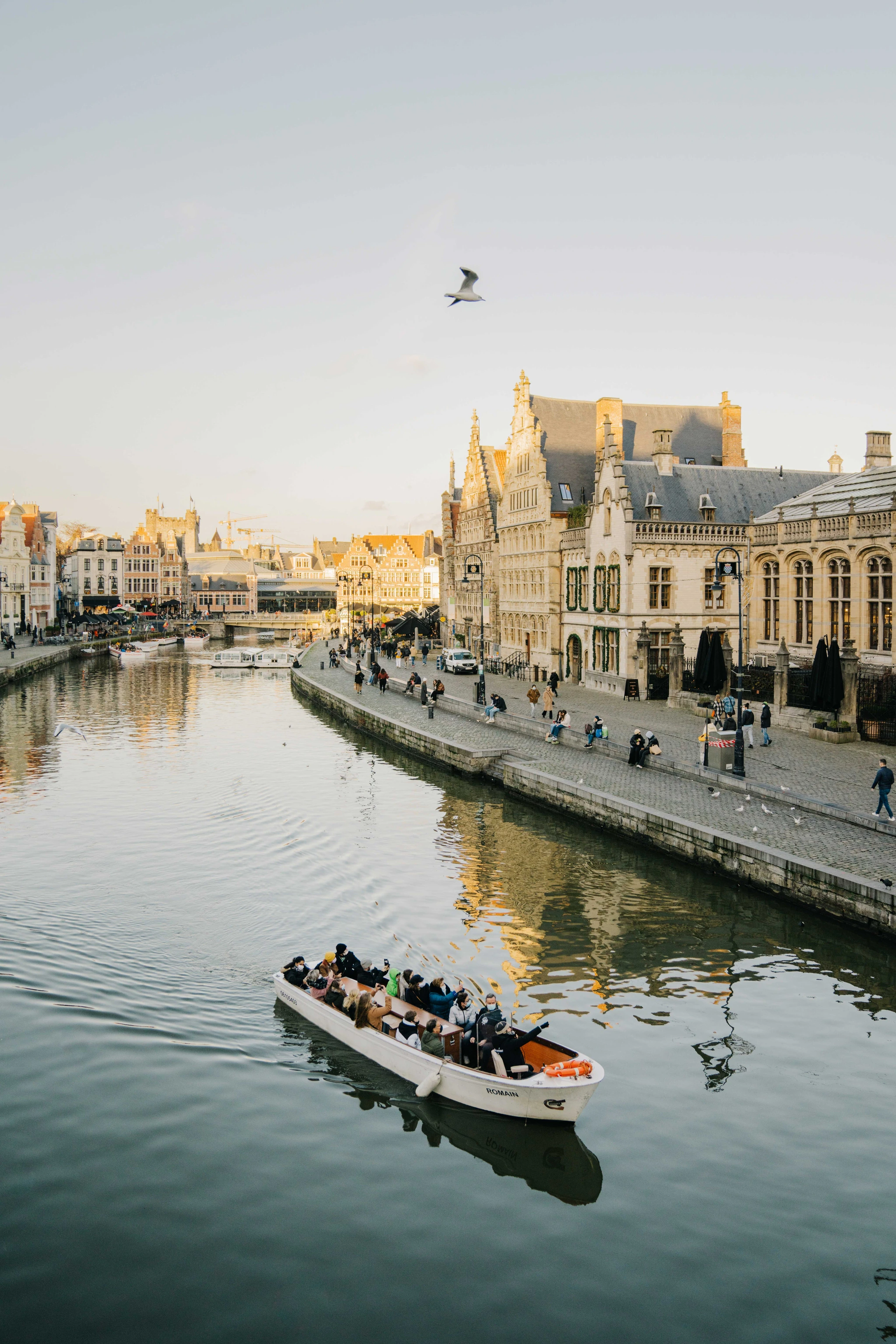
Ghent's waterways retain their original function as commercial arteries linking the city to the North Sea, a heritage visible in the converted warehouses and lock systems passed during tours departing from the Graslei embankment. Guides narrate the Leie and Scheldt rivers' role in the cloth trade that financed the guild halls now lining the quays, and the 20th-century port expansion that turned Ghent into Belgium's third-largest harbor. The boat tour Ghent or Bruges decision often hinges on whether you value contextual storytelling over visual density—Ghent's routes cover more linear distance and reveal the city's industrial layers, while Bruges concentrates its Gothic landmarks within a shorter loop. Bruges markets its canals as the "Venice of the North," a label that reflects both the picturesque stone bridges arching over narrow channels and the summer tourist volume those comparisons attract. Tour boats there navigate past the Beguinage gardens and under the Bonifacius Bridge, with commentary focused on medieval prosperity frozen in brick and bell towers. The Bruges waterway system is largely residential in scale, offering close views of step-gabled houses but less narrative scope than Ghent's working river context. Accessibility factors differ materially: Ghent's Graslei boarding point requires descending two steps to the dock, manageable for most but worth noting for mobility planning. Bruges operators vary by departure location, some offering level boarding near the Vismarkt. Both cities schedule departures every 15–20 minutes during peak season, though Ghent's slightly longer tour duration means fewer boats cycle through per hour. Weather affects both routes equally—open vessels operate April through October, with canvas covers deployed during rain but tours suspended in high wind. The choice ultimately reflects what you want the water to frame. Ghent canal cruises thread between centuries of adaptive reuse, where medieval towers stand beside contemporary glass-and-steel university buildings. Bruges polishes a singular historical moment, its canals serving as moats around a preserved 14th-century urban core. Neither experience is objectively superior; the boat tour Ghent or Bruges guide simply asks whether your interest leans toward living history or curated preservation.
“Ghent's waterways retain their original function as commercial arteries linking the city to the North Sea, a heritage visible in the converted warehouses and lock systems passed during tours.”
The optimal time to experience a boat tour in Ghent is during the early morning window of 10:00–10:30. Arriving during this period helps avoid the peak crowds that build up by mid-morning during the summer months.
—
Visiting mid-week provides a quieter atmosphere on the canals. This is the ideal time to enjoy the historic architecture without the heavy foot traffic.
Mild temperatures around 15°C
Spring offers pleasant weather and fewer visitors than the peak summer season. The city is accessible and comfortable for outdoor activities.
Cooler temperatures around 14°C
As the peak season wanes, the canals become more tranquil. This period provides clear views and manageable crowd levels.
Verdict: The best time to visit is Tuesday to Thursday between 10:00 and 10:30 in April or October.
Everything you need to know about boat tour ghent or bruges
Choosing between a boat tour ghent or bruges often depends on your preference for medieval architecture versus vibrant canal-side café culture. Ghent offers a unique perspective on the city's guild halls and historic riverfront, while Bruges is renowned for its enclosed, fairy-tale canal loops. Both cities provide excellent waterway experiences that showcase their distinct UNESCO heritage sites.
A standard boat tour ghent or bruges in the city of Ghent typically lasts 40–50 minutes. This duration is designed to cover the most prominent waterfront sights without rushing your exploration of the medieval core. It provides sufficient time to capture photographs of the Leie riverbank.
Booking a boat tour ghent or bruges in advance is recommended to ensure your preferred time slot, especially during peak tourist months. Having a reserved spot allows you to plan your day around other visits to local museums or the Belfry. You can find more information on the official website.
Is a Ghent Boat Tour Worth It?
Read more GuideGhent Boat Tours in English
Read more GuideGhent Boat Tour Schedule & Times
Read more GuideEvening & Night Boat Tours in Ghent
Read more GuideWhere to Find Ghent Boat Tours
Read more Tickets & toursGhent Boat Tour Tickets & Prices
Read more Tickets & toursGhent Boat Tours with Beer & Drinks
Read more Tickets & toursPrivate Boat Tours in Ghent
Read more